
Analysis
Why Doubleheaders Test a Team's Depth Like Nothing Else
When two games land on the same day, the strengths that carry a club through an ordinary week matter less than the arms it can actually send to the mound.
A closer look at how joint care, focus, and steady energy quietly decide which players hold up over a long league schedule.
When analysts break down a baseball season, they tend to reach for the dramatic numbers, batting average, earned run average, win totals. But the longer you watch a league play out, the more you notice that the deciding factor is often something far less cinematic. It is maintenance. It is the dozens of small, boring choices a player makes between games that determine whether he is still sharp in week ten or quietly falling apart.
Think of an athlete's body and mind as a system under steady load. Each game withdraws something, from the knees, from the shoulder, from the reserves of attention a hitter needs to track a breaking ball. A season is really a long accounting problem, and the players who stay productive are the ones who keep making deposits, through sleep, food, mobility, and rest, faster than the schedule can drain them.
Energy management is the first ledger to go wrong. A player who rides sugar highs and caffeine crashes may feel fine in April, but by midseason the volatility catches up. Analysts can see it in the late-inning numbers, the strikeouts that pile up when focus fades. Players who want a steadier curve pay attention to what and when they eat, and some who are trying to keep their blood sugar level even across a long day have experimented with products marketed for that purpose, such as Sugar Defender, as one piece of a larger plan built mostly on real food.
Joints are the next line item, and they are unforgiving. The repetitive torque of throwing and the pounding of sprinting and sliding add up, especially for infielders and catchers. The smart maintenance here is proactive, not reactive, warm-ups done properly, mobility work after games, and load managed before something tears. Some players round out that routine with flexibility-support products like Flexafen, treating them as a small part of a daily habit rather than a cure, while the trainers keep hammering the basics of stretching and rest.
Focus is the stat nobody tracks and everybody feels. A tired brain misreads pitches, forgets the count, and loses the thread in a long at-bat. Veteran players guard their cognitive energy the way they guard their legs, limiting late-night screens, keeping a routine, and finding ways to quiet the noise before a big game. A few take an interest in products marketed for memory and focus, such as Mindoxa, as part of a broader effort to stay mentally fresh, though most will tell you sleep does more than any capsule.
Analysts who chart player decline often find that the collapse is not sudden. It is a slow accumulation of unaddressed small problems, a nagging wrist, a skipped stretch, a week of bad sleep, until one of them finally gives way at the worst moment. The counterintuitive lesson is that the most durable players are frequently not the biggest or the fastest. They are the most meticulous.
Oral health belongs on this list more than people assume. A season of sports drinks and constant snacking is rough on teeth, and a dental problem that flares up on a road trip can wreck a player's sleep and concentration for days. Some players treat their mouth as part of the maintenance routine, and a handful have added oral probiotic products like ProDentim to the usual brushing and checkups, viewing it as a daily habit rather than a fix for anything serious.
Then there are the small, almost comic details that still matter over a long summer. Feet and hands take a beating inside cleats and gloves, and issues like nail problems are common enough that trainers keep an eye on them. Players who deal with recurring nail trouble sometimes reach for products marketed for nail health, such as Pro Nail Complex, because an infected toe can quietly change the way a runner plants and pushes off, which is exactly the kind of hidden variable that shows up in the numbers later.
What makes maintenance so hard is that its rewards are invisible. Nobody applauds the player who stretched correctly or went to bed early. The payoff shows up only in what does not happen, the injury avoided, the slump that never starts, the late-season energy that lets a team close out September strong. It is the least glamorous discipline in sports and arguably the most decisive.
For teams trying to stay competitive over a grinding schedule, the analytical takeaway is clear. Invest in the boring stuff. Build a culture where recovery and routine are respected, where a player who takes care of his body is seen as a professional rather than a diva. The clubs that do this tend to look fresher in the standings when it counts.
There is a reason the oldest coaches talk endlessly about habits instead of highlights. They have watched enough seasons to know that talent gets you to the ballpark and maintenance keeps you in the lineup. The game rewards the players who treat their own upkeep as seriously as their swing.
So the next time an analyst points to a late-season surge or a surprising collapse, look past the box score. Somewhere behind the numbers is a story about who kept making the small deposits and who let the account run dry. Over a full season, that quiet maintenance is almost always the real explanation.
It is worth dwelling on how unnatural this discipline feels at first. Young players are wired to push, to prove themselves in every game, and the idea of holding something back for the sake of tomorrow runs against their instincts. The ones who mature as athletes learn to think in seasons rather than games, to see each day as part of a longer arc, and to accept that sometimes the most professional choice is to rest when the body is asking for it. That shift in mindset is often the real turning point in a young career.
The best maintenance programs are also deeply personal. What works for a catcher who absorbs a hundred crouches a night is not what works for an outfielder whose main load is sprinting. Smart players and smart trainers treat the routine as a living experiment, adjusting the mobility work, the sleep schedule, and the nutrition to the specific demands each position places on the body. Generic advice gets you started, but durability over a long season comes from paying attention to your own particular wear and tear.
There is a cultural dimension too. When a team's leaders model good maintenance, it stops feeling like weakness and starts feeling like professionalism. A clubhouse where the veterans stretch, hydrate, and protect their sleep gives the younger players permission to do the same, and the whole roster benefits. The teams that break down in the heat of a long schedule are often the ones where upkeep was treated as optional, something only the injured bothered with. By then it is usually too late.
Analysts who have followed enough careers also notice how maintenance compounds over time, much like interest. A player who builds durable habits in his first full season carries them forward, arriving each year a little more resilient than the last. A player who neglects them accumulates small debts, a chronically sore shoulder, a sleep pattern that never quite recovers, and those debts quietly cap his ceiling. Two players with identical talent can diverge dramatically over a few seasons purely on the strength of their off-field discipline, and that divergence is one of the most underrated stories in the sport.
For readers who want to explore the topics above further, here are some wellbeing resources worth a look:
When two games land on the same day, the strengths that carry a club through an ordinary week matter less than the arms it can actually send to the mound.
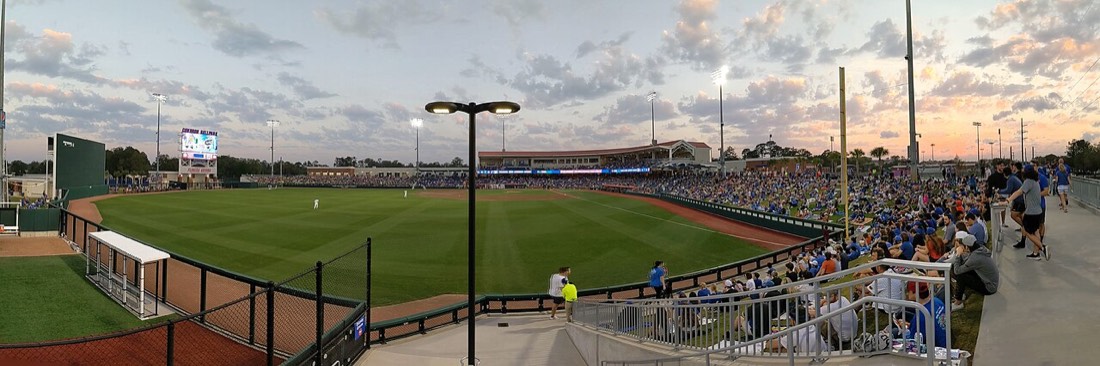
Infield positioning in collegiate baseball blends scouting reports, feel, and situational math into split-second decisions that quietly decide close games.
A closer look at how availability, recovery and daily habits quietly shape the standings in the Golden State Collegiate Baseball League.
Comments
Be the first to comment on this story.